Halloween Wreaths Laser Cut SVG: A Practical Guide to Design Formats and Crafting Applications
Preparing for the autumn season involves more than just selecting a theme; it requires choosing the right tools to bring that vision to life. For crafters, DIY enthusiasts, and small business owners, the transition from concept to physical decor often hinges on the digital files used to drive cutting machines. Among the most popular seasonal items is the Halloween wreath, a staple of front door decoration that sets the tone for the holiday. To achieve professional-grade results, many creators are turning to specialized digital assets, specifically Halloween Wreaths Laser Cut SVG collections.
This article explores what these specific file formats entail, how they compare to traditional crafting methods, and why understanding the technical nuances of SVG, DXF, and other vector formats is crucial for achieving intricate, high-quality results. Whether you are looking to create a single statement piece for your home or scaling up production for a local market, evaluating the strengths and limitations of laser-cut vector designs will help you make an informed decision.
Understanding the Technology Behind Laser Cut SVGs
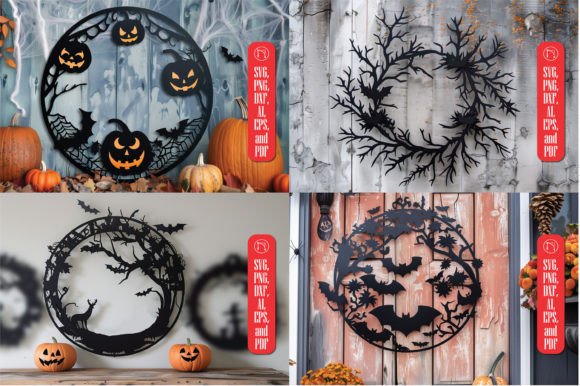
The term "SVG" stands for Scalable Vector Graphics. Unlike raster images (such as JPEGs or PNGs) which are made of pixels and can become blurry when resized, vector graphics are defined by mathematical equations. This allows them to be scaled to any size without losing resolution or clarity. When applied to Halloween Wreaths Laser Cut SVG designs, this capability is essential because wreaths often feature delicate details—like spiderwebs, lace patterns, or fine leaf veins—that must remain crisp regardless of whether the final cut is four inches or forty inches wide.
A dedicated collection of these files typically includes multiple formats to ensure compatibility across different software ecosystems. While SVG is the standard for many modern cutting machines like Cricut and Silhouette, the inclusion of DXF, AI, EPS, and PDF formats broadens the utility of the design. DXF (Drawing Exchange Format) is widely used in CAD software and industrial laser cutters, while AI (Adobe Illustrator) and EPS (Encapsulated PostScript) are industry standards for graphic designers. PDF files often serve as a universal backup or for printing templates directly.
Why Vector Files Matter for Intricate Designs
Halloween wreaths are rarely simple shapes. They often involve layered elements, negative space, and complex interlocking parts. If a crafter attempts to use a low-resolution image with a vinyl cutter, the machine may struggle to interpret thin lines, resulting in torn material or incomplete cuts. By using Halloween Wreaths Laser Cut SVG files, users ensure that every curve and corner is precisely defined. This precision is particularly important when working with materials like chipboard, basswood, or thick cardstock, where accuracy determines the structural integrity of the final product.
Comparing Laser Cut SVGs to Traditional Cutting Methods
When deciding on a crafting approach, it is helpful to compare the capabilities of digital laser/vector cutting against manual techniques or simpler print-and-cut methods. Each method has distinct tradeoffs regarding time, cost, and aesthetic outcome.
- Manual Cutting: Using scissors or hobby knives offers maximum control but is incredibly time-consuming. For complex wreath designs with dozens of small elements, manual cutting can take hours or even days. The risk of human error increases with complexity, often leading to uneven edges.
- Print and Cut: This method involves printing a design on adhesive paper and then using a machine to trace the outer edge. It is suitable for simple shapes but fails to capture internal details. You cannot cut out the center of a letter or a web pattern using this method alone.
- Laser/Vector Cutting: Utilizing Halloween Wreaths Laser Cut SVG files allows for simultaneous cutting of all elements, including internal details. This method is significantly faster for repetitive tasks and ensures uniformity across multiple copies. However, it requires access to compatible hardware, such as a laser engraver/cutter or a precision blade plotter.
The choice between these methods often depends on the desired level of detail and the volume of production. For a one-off home project, manual cutting might feel more personal, but for those seeking a polished, store-bought look, vector cutting provides a superior finish.
Evaluating File Formats and Software Compatibility
One of the primary advantages of a comprehensive bundle containing Halloween Wreaths Laser Cut SVG, along with PNG, DXF, AI, EPS, and PDF, is versatility. Different crafting workflows require different file types, and having access to multiple formats prevents technical bottlenecks.
SVG vs. DXF: The User Interface Divide
For hobbyists using consumer-grade cutting machines, SVG is generally the preferred format. Most user-friendly software interfaces, such as Cricut Design Space or Silhouette Studio (Basic), natively support SVG uploads. These files are lightweight and easy to manipulate within the browser or app environment.
Conversely, DXF is the lingua franca of professional design and industrial machinery. If a crafter uses Adobe Illustrator, CorelDRAW, or AutoCAD, DXF files integrate seamlessly into existing projects. Furthermore, some laser cutters operate exclusively on DXF data streams. Therefore, a bundle that offers both ensures that the designer can switch between consumer-friendly tools and professional-grade software without needing to recreate the artwork from scratch.
The Role of Raster Formats (PNG and PDF)
While SVG, DXF, AI, and EPS are vector-based, PNG and PDF serve different purposes. High-resolution PNGs are useful for visualizing the design before cutting or for transferring the image to a surface via heat transfer vinyl (HTV) if the design does not require intricate internal cuts. PDFs are excellent for creating stencils or for printing reference guides. In the context of Halloween Wreaths Laser Cut SVG collections, these formats act as supplementary assets, ensuring that the user has options for display, planning, and alternative crafting techniques.
Material Considerations and Design Limitations
While the digital files provide the blueprint, the success of the project depends heavily on material selection. Not all materials behave the same way under a laser or a blade. Understanding these physical constraints is part of the evaluation process for any serious crafter.
Vinyl and Cardstock: These are the most common materials for beginners. Vinyl decals are perfect for window applications, while cardstock wreaths offer a sturdy, three-dimensional structure. The Halloween Wreaths Laser Cut SVG designs are optimized for these materials, with line weights set to prevent tearing or burning.
Wood and Acrylic: For a more durable, rustic, or modern aesthetic, wood and acrylic are popular choices. Laser cutters excel here, burning through the material cleanly. However, thicker woods may require higher power settings, which can change the color of the cut edges. Crafters must adjust their machine settings accordingly, a step that is independent of the file format but critical to the outcome.
Fabric and Felt: Cutting fabric with a laser can result in frayed edges unless the material is synthetic and melts cleanly. For natural fibers like cotton or wool, blade cutters are safer. When using Halloween Wreaths Laser Cut SVG files for fabric, users should consider stabilizing the material with interfacing to maintain shape during the cutting process.
Decision Factors: When to Choose Laser Cut SVGs
Is investing in a Halloween Wreaths Laser Cut SVG bundle the right move for you? The answer depends on your goals, resources, and skill level.
Choose this option if:
- You value precision and intricate detail over speed.
- You own or have access to a cutting machine (Cricut, Silhouette, Glowforge, etc.).
- You plan to create multiple versions of the same design, either for personal variety or resale.
- You want to minimize waste by optimizing layout and cutting paths.
Consider alternatives if:
- You prefer hand-crafted imperfections and enjoy the meditative process of manual cutting.
- You do not have access to digital cutting equipment and are unwilling to purchase one.
- Your projects are highly experimental and require non-standard materials that do not respond well to vector cutting.
Maximizing Creative Potential
The true value of Halloween Wreaths Laser Cut SVG collections lies in their adaptability. These files are not static end-products; they are starting points for creativity. Users can modify the scale, change colors, combine multiple wreath designs into a single layered composition, or add text overlays. Because the files are vector-based, resizing a spiderweb element to fit a smaller tag or enlarging a pumpkin motif for a banner is instantaneous and lossless.
Furthermore, the diversity of formats allows for cross-disciplinary projects. A designer could take the SVG file, import it into a 3D modeling program, and prepare it for CNC routing on a larger scale, effectively bridging the gap between small-scale crafts and large-scale installation art. This flexibility makes the investment in high-quality digital assets far more valuable than pre-made physical decorations, which offer little room for customization.
Conclusion
Selecting the right resources for Halloween decor involves balancing aesthetic desires with technical feasibility. Halloween Wreaths Laser Cut SVG bundles represent a robust solution for crafters who prioritize detail, efficiency, and professional finishes. By offering a range of compatible formats and leveraging the precision of vector graphics, these designs empower users to transform simple materials into stunning seasonal displays. Whether you are a seasoned pro or a curious beginner, understanding the capabilities and limitations of these digital tools ensures that your Halloween projects are not only spooky and festive but also structurally sound and visually impressive.