Laser Cut Chest 6 Drawers in Two Rows: A Practical Review for Organized Spaces
In the realm of DIY organization and laser cutting projects, few items offer as much functional versatility as a well-designed storage cabinet. The Laser Cut Chest 6 Drawers in Two Rows stands out as a compelling solution for individuals seeking to maximize storage capacity without sacrificing floor space. This template is not merely a decorative piece; it is a engineered system designed to integrate seamlessly into existing furniture setups while providing robust organizational capabilities for tools, office supplies, or household goods.
For professionals, hobbyists, and small business owners alike, the ability to declutter efficiently is often tied directly to productivity and mental clarity. This particular design addresses common pain points in home and office organization by offering a modular approach to storage. By analyzing its construction, compatibility, and usability, we can determine how this Compound Organizer fits into various workflows and living environments.
Design Philosophy and Structural Integrity
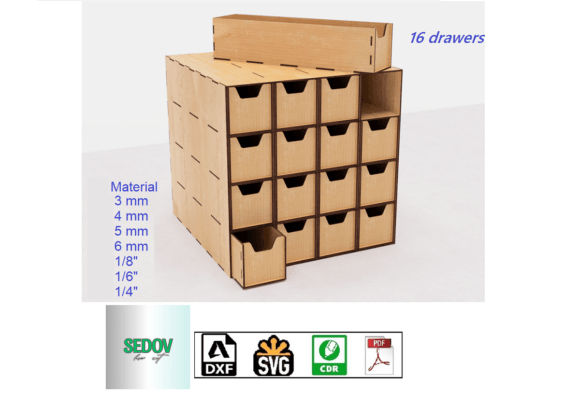
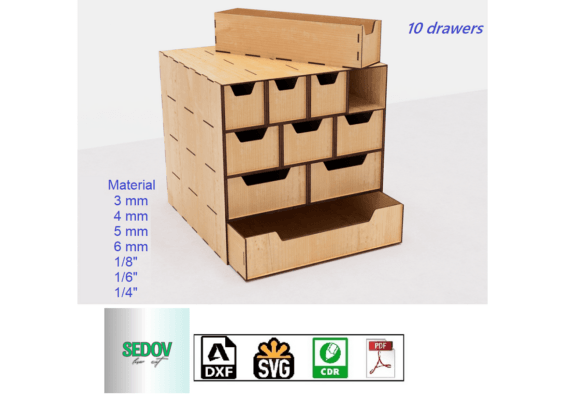
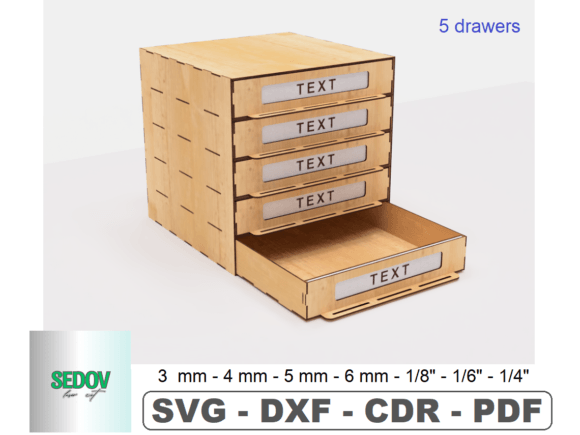
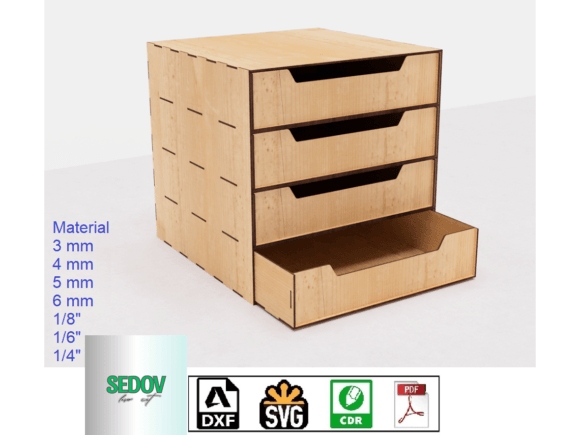
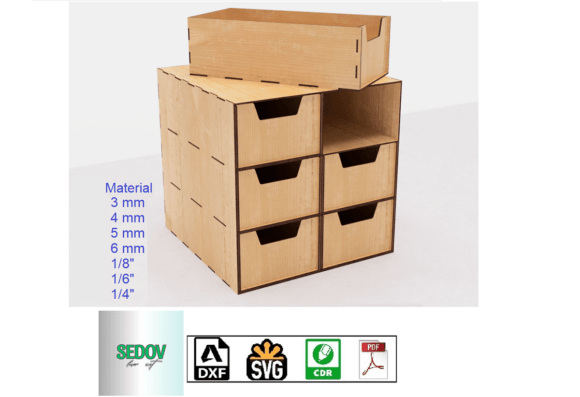
The core strength of the Laser Cut Chest 6 Drawers in Two Rows lies in its dual-row configuration. Unlike traditional single-column chests that require significant vertical clearance, this design arranges six pull-out drawers across two distinct rows. This layout creates a low-profile unit that can slide under desks, fit into narrow alcoves, or sit atop lower shelving units. The result is a storage solution that minimizes its footprint while maintaining a high volume of accessible compartments.
From an engineering perspective, the laser-cut nature of the components ensures precision. Each joint and slot is cut with accuracy that manual woodworking often struggles to replicate consistently. The use of interlocking joints, typical in such SVG and DXF templates, means that the final assembly relies on friction and precise fit rather than excessive glue or hardware. For the builder, this translates to a cleaner aesthetic and a stronger structural bond over time, provided the material thickness is respected during the cutting process.
The design’s emphasis on modularity also allows for flexibility. Whether you are building a single unit or multiple units to create a larger wall of storage, the consistency of the template ensures that all pieces will align correctly. This repeatability is crucial for creators who may want to produce several units for different clients or rooms, ensuring that every drawer slides smoothly and every panel sits flush.
Material Compatibility and Build Specifications
One of the most practical aspects of this template is its adaptability to various material thicknesses. The product specifications indicate that the design accommodates plywood ranging from 3 mm to 6 mm, as well as imperial measurements including 1/4 inch, 1/6 inch, and 1/8 inch. This wide range of compatibility makes the Laser Cut Chest 6 Drawers in Two Rows accessible to users with different equipment and budget constraints.
- 3 mm to 5 mm Plywood: Ideal for lightweight applications such as office supply organizers or craft storage. Thinner materials keep the overall weight down, making the drawers easier to pull out fully without sagging.
- 6 mm Plywood: Offers increased rigidity and durability, suitable for heavier tools, books, or industrial supplies. The added thickness provides better resistance to warping over time.
- Imperial Thicknesses (1/4", 1/6", 1/8"): Caters to users working with standard sheet goods found in North American hardware stores, ensuring that the template is globally usable regardless of local metric standards.
When selecting your material, consider the end-use environment. Moisture-prone areas like garages may benefit from marine-grade plywood or treated wood, while indoor office settings might prefer birch or maple veneer ply for a smoother finish. The template files, available in SVG, DXF, CDR, and PDF formats, allow you to adjust kerf compensation settings in your laser cutting software if necessary, ensuring that the slots and tabs fit together perfectly regardless of your machine’s specific cut width.
Integration with Ikea Kallax and Modular Shelving
A standout feature of this storage chest is its intentional design to fit within the niches of Ikea Kallax shelves. This compatibility opens up a world of customization possibilities for users who already own these popular modular shelving units. Instead of purchasing expensive aftermarket inserts that may not fit precisely, builders can create custom-sized drawers that match the internal dimensions of the Kallax cubes exactly.
This integration offers several advantages. First, it transforms open cubbies into closed storage, hiding clutter and protecting contents from dust. Second, it allows for color and material matching. If you have a white Kallax shelf, you can stain or paint the laser-cut chest to blend in seamlessly. Conversely, using a contrasting wood tone can turn the storage unit into a deliberate design accent. The double-drawer configuration fills the height of standard Kallax units effectively, utilizing vertical space that would otherwise be wasted or difficult to access.
For educators, librarians, or retail display managers, this synergy between the laser-cut chest and modular shelving provides a scalable storage system. You can mix and match open shelves for frequently accessed items with the enclosed drawers for sensitive or less-used materials, creating a balanced and efficient workflow.
Usability and Assembly Experience
Assembly is a critical factor in the appeal of any DIY project. The Laser Cut Chest 6 Drawers in Two Rows is marketed as being easy to assemble, which is particularly beneficial for beginners in laser cutting. The design likely employs a tongue-and-groove or box-joint style assembly where parts slide together with minimal effort. However, success depends heavily on proper calibration of the laser cutter and accurate material selection.
For experienced makers, the assembly process should be straightforward, taking only a few hours depending on the number of units built. Beginners should anticipate a learning curve related to laser cutting parameters. It is advisable to perform test cuts on scrap material to verify that the slot widths match the tab sizes for the chosen plywood thickness. A tight but sliding fit is ideal; too loose, and the structure will wobble; too tight, and the pieces may not assemble or could crack the wood.
Once assembled, the functionality of the drawers is paramount. Smooth operation is achieved through precise alignment of the drawer runners and sides. Users may need to add simple glides or felt pads to the bottom of the drawers to prevent scratching and ensure smooth sliding, especially if the drawers are placed on carpeted floors or uneven surfaces. These minor additions significantly enhance the long-term usability and user experience of the unit.
Ideal Use Cases and Target Audience
Who benefits most from the Laser Cut Chest 6 Drawers in Two Rows? The answer spans several professional and personal domains.
Freelancers and Remote Workers: Home offices often lack dedicated filing systems. This compact chest can serve as a desktop organizer or a floor-standing file cabinet, keeping documents, notebooks, and tech accessories neatly categorized. Its low profile ensures it does not obstruct sightlines in small home office spaces.
Crafters and Makers: Artists and makers require organized storage for small items like beads, screws, paints, and brushes. The six drawers provide ample compartmentalization, allowing for quick identification and retrieval of supplies. The ability to customize drawer dividers further enhances its utility for detailed work.
Garage and Workshop Enthusiasts: While the design is elegant enough for indoor use, its sturdy construction makes it suitable for garage organization. Storing power tool batteries, drill bits, and fasteners in labeled drawers keeps workshops tidy and safe. The option to use thicker plywood adds the necessary durability for handling heavier hardware.
Educators and Parents:
No product is without limitations. One consideration is the load-bearing capacity of the drawers. While the structure is sound, pulling heavy items from a drawer supported only by thin plywood runners can cause sagging if not reinforced. Users storing dense items like books or metal tools should consider adding back supports or using thicker materials. Additionally, the finish of the raw plywood may require sanding and sealing to achieve a professional look. Laser cutting leaves charred edges on some woods, which may need light sanding or filling to ensure a smooth appearance. For those seeking a ready-to-use product, this additional finishing step requires time and effort. However, for many DIY enthusiasts, this finishing process is part of the satisfaction of creating a bespoke item. Another factor is the initial investment in laser cutting services or equipment. If you do not own a laser cutter, outsourcing the cutting can add to the cost. However, compared to buying equivalent custom-built wooden furniture, the template-based approach remains cost-effective, especially when considering the time saved in design and prototyping. The Laser Cut Chest 6 Drawers in Two Rows represents a thoughtful intersection of form and function. It addresses the modern need for efficient, space-saving storage solutions while leveraging the precision and creativity enabled by digital fabrication tools. Its compatibility with popular shelving systems like Ikea Kallax expands its utility, allowing it to integrate into existing decor rather than standing as an isolated piece. For anyone looking to enhance their organizational infrastructure, whether in a home office, workshop, or creative studio, this template offers a reliable and adaptable foundation. The availability of multiple file formats and support for various material thicknesses ensures that builders of all skill levels can undertake the project with confidence. By prioritizing practical design and user-friendly assembly, this storage cabinet delivers lasting value, transforming cluttered spaces into orderly, efficient environments.Potential Limitations and Considerations
Final Assessment
🔗 You Might Also Like